 Anyway
A choose-your-own-adventure storybook app for children aged 6 to 12, made for a parent and a child side by side. You read it out loud, they decide what happens next, and every choice leads somewhere different.

Over 60 free stories, contains no ads, and new stories are added every month.
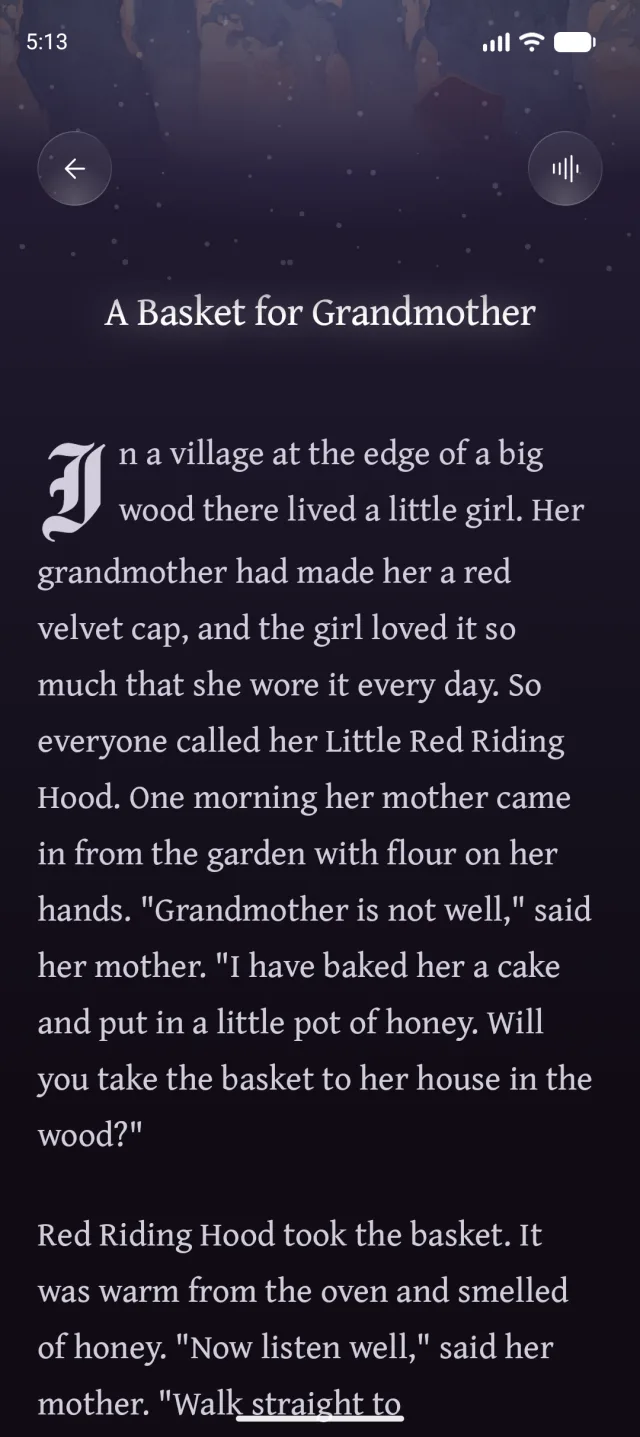
Anyway is built for the twenty minutes before bed, when the two of you are sitting next to each other with one phone between you. You read the story out loud. Your child decides what happens next. It barely works if they are alone with it, and that is deliberate.
We kept seeing the same thing: a phone handed over to keep a child occupied, and a child who disappears into it. Most apps aimed at kids are engineered to hold attention. Endless feeds, autoplay, a next thing that begins before the last one has finished. Attention is the product, and the child is the one paying for it.
We wanted the opposite of that. A story has a beginning, a middle, and an ending you arrive at together. When you get there, it is over. You put the phone down and talk about it. Anyway is designed to be finished, not to be fed.
So there is nothing in the app built to keep your child scrolling. No ads. No infinite feed. Nothing plays on its own. When the story ends, the app has nothing else to ask of either of you.
“Parents decide when it is time to read, and when it is time to stop.”
Not an algorithm. Not a feed. Not the app.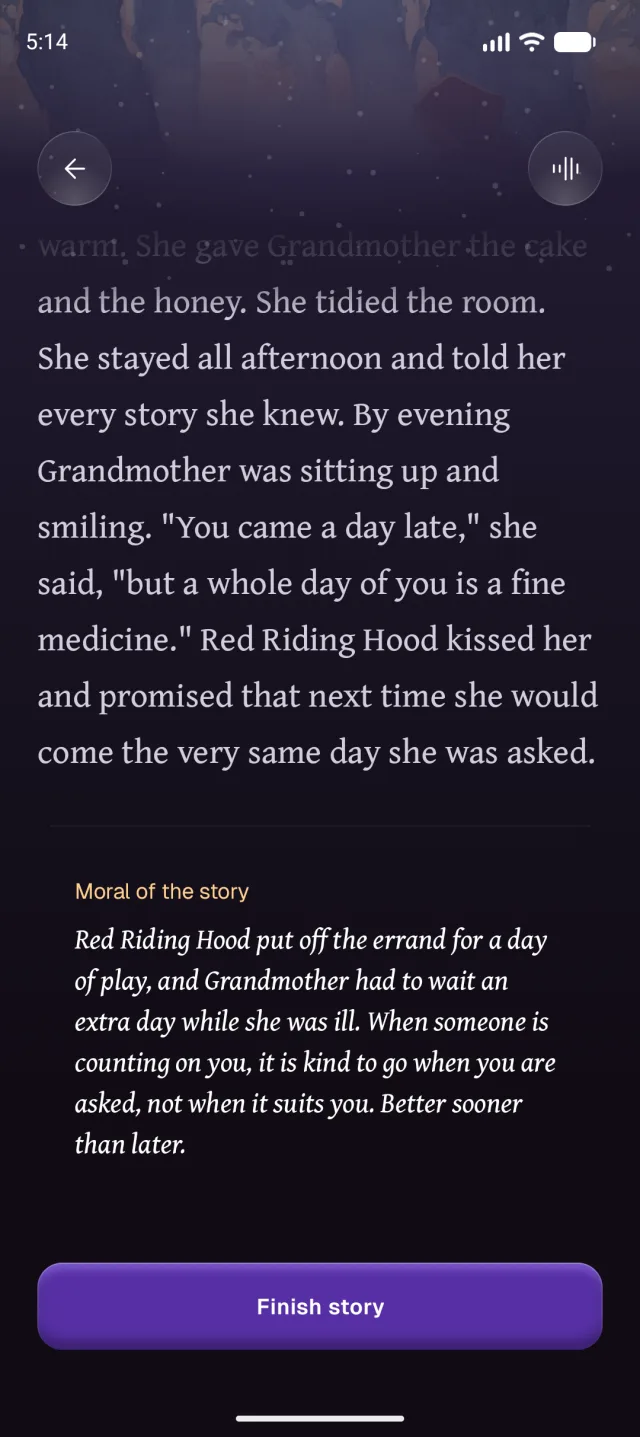
This is how one path through Little Red Riding Hood finishes. She chose a day of play over the errand, and Grandmother waited. The app does not scold, and it does not queue up the next thing. It hands the two of you a moral and stops.
Moral of the storyWhen someone is counting on you, it is kind to go when you are asked, not when it suits you. Better sooner than later.
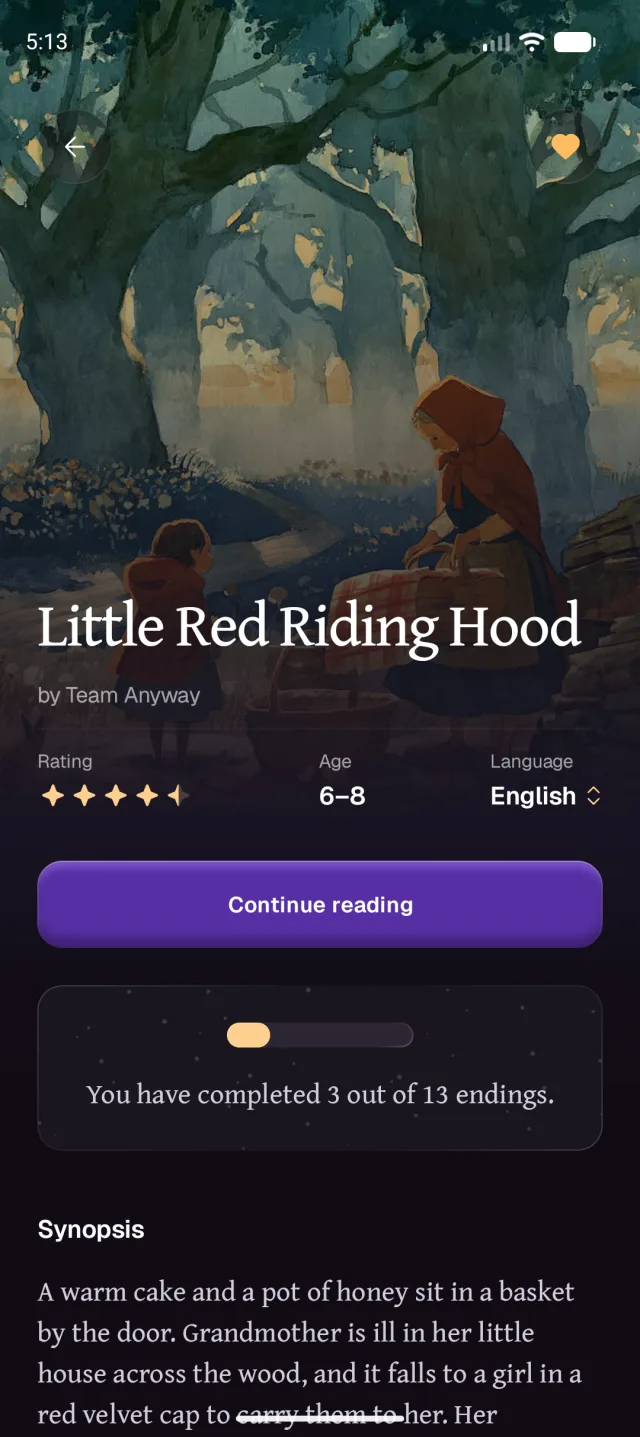
That sentence is the whole product. Not watch time, not streaks, not a next video already loading. A child who made a choice, saw where it led, and now has something to say about it. Thirteen endings in this story alone, each with a moral of its own.
Ask them at breakfast: would you have gone straight there?
The research on early reading points in a remarkably consistent direction: children who are read to, and who go on to read by themselves, arrive at school with a wider vocabulary and a longer attention span, and that head start keeps compounding for years afterwards. Anyway is our attempt to turn that habit into something a child actually asks for.
The app only works with both of you in it. You do the voices, they steer the plot. It turns screen time from something that separates you into something you are doing side by side.
Story language is not everyday language. Children meet words in books they would almost never hear in conversation, in a context that makes the meaning obvious.
Following a narrative for ten minutes, holding the thread, remembering a choice made earlier: that is sustained attention, practised every evening. Nothing here interrupts it.
Every crossroad is a small window into your child's reasoning. Asking why they chose what they chose is usually the best part of the evening.
The goal was never more time in Anyway. It is a child who reaches for a book on their own, because reading has become the good part of the day rather than homework.
Every path finishes. There is no “just one more” because there is no more, which makes bedtime a considerably shorter negotiation.
We have not invented any of this. The link between early reading and later school performance is one of the most studied findings in child development, and it is easy to look up. We simply built the thing we wished existed for our own evenings.
Browse by genre and age. Nothing is recommended by an algorithm. You choose, or you let your child choose, and that is the whole selection process.
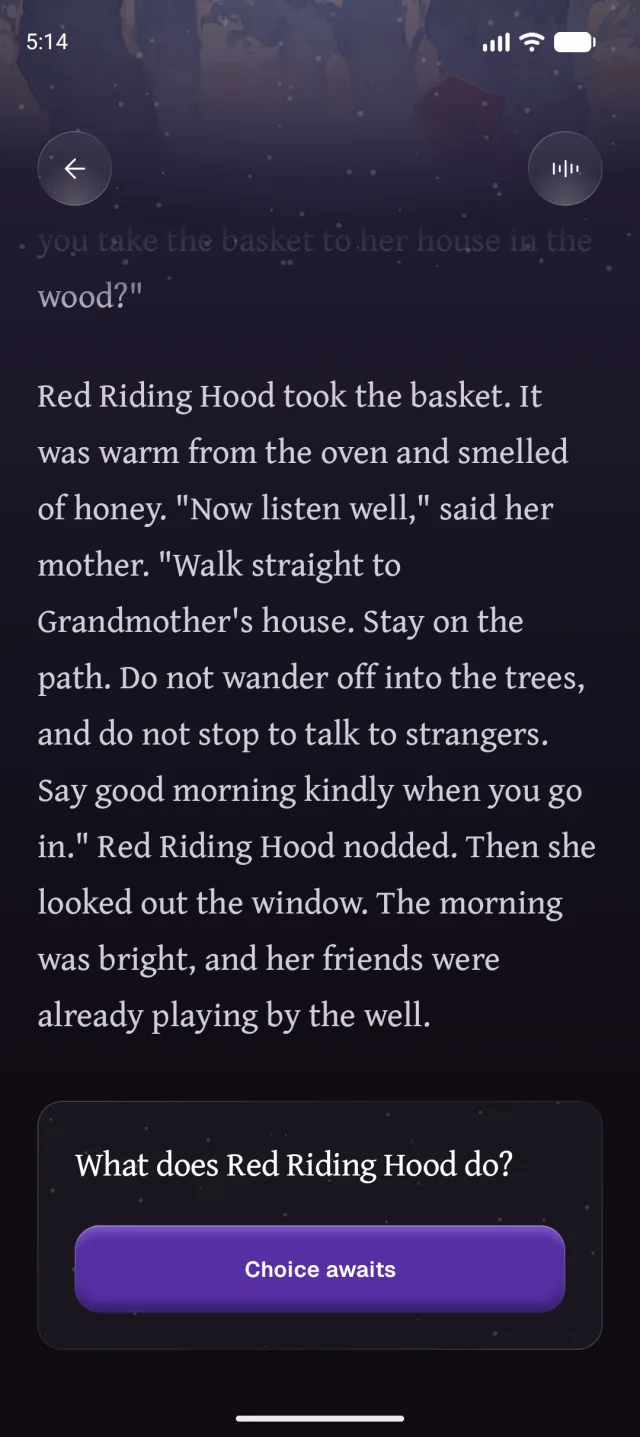
You narrate. At every crossroad your child picks the path the story takes. Ten minutes, give or take, from the first page to an ending.
Every path closes with a moral. Ask why they chose what they chose, then decide together whether tomorrow is a new story or a different route through this one.
At every crossroad your child decides what the hero does next, and the story follows. No two evenings read the same.
Every story is written for children and reviewed before it goes live, so you can hand over the choices without reading ahead.
Little Red Riding Hood alone has thirteen endings. Take a different path tomorrow and see where it leads.
Each ending closes with a moral written for that path, and a ready-made question for the walk to school.
Over 60 stories, free. No ads, no feed, and no reason for anyone to keep looking at the phone once the story is over.